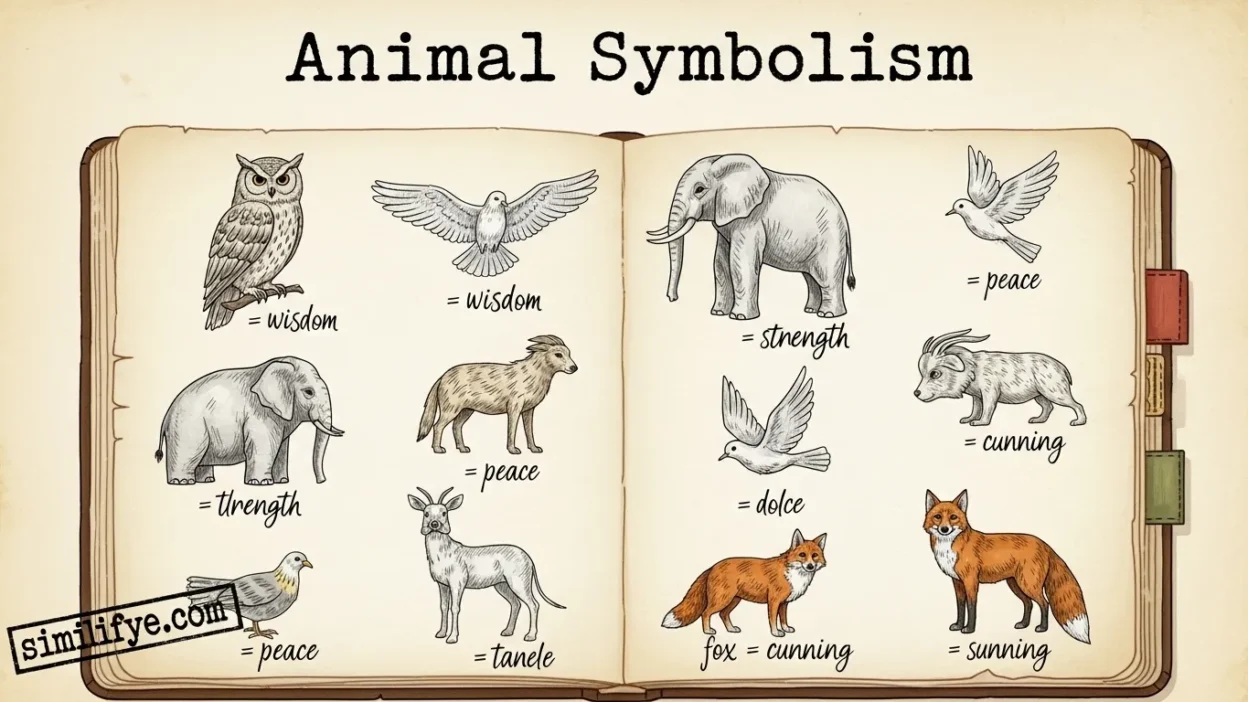
Have you ever wondered why animal symbolism shows up everywhere in stories, dreams, and even your favorite movies?
Picture this. A little girl loses her grandmother. The next morning, a red cardinal lands on her windowsill and just… stares at her. She bursts into tears not from sadness, but from a feeling she couldn’t explain. Peace.
That moment wasn’t a coincidence to her. It was a message.
For thousands of years, humans have looked at animals and seen something deeper than fur, feathers, or fins. We’ve seen courage in lions. Wisdom in owls. Freedom in eagles.
And honestly? That instinct makes total sense.
Animals have been our mirrors reflecting the emotions, values, and truths we struggle to put into words ourselves.
So whether you’re spiritual, curious, or just love a good story animal symbolism is about to change the way you see the world.
Animal Symbolism: The Foundation of a Ancient Language
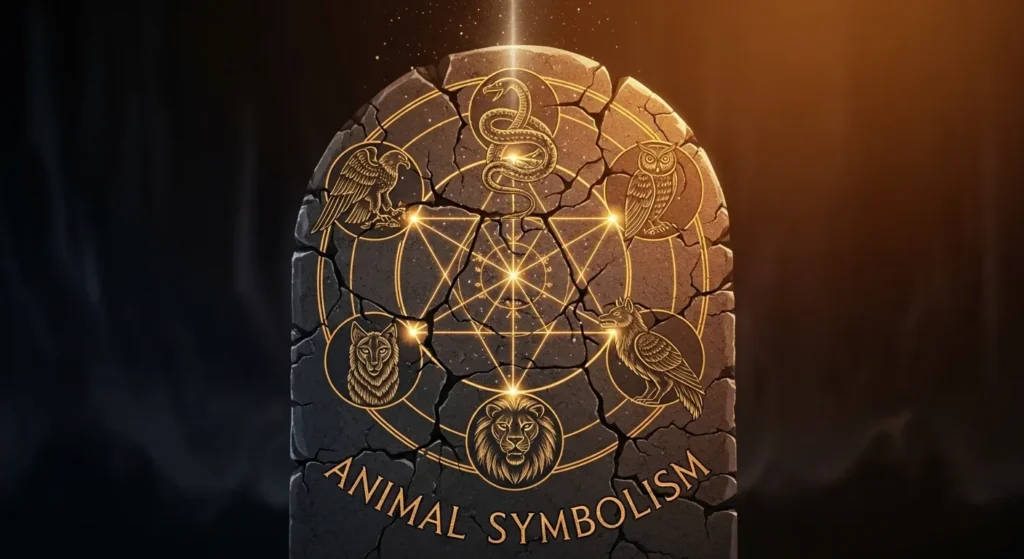
Animal symbolism is the practice of assigning spiritual, emotional, or psychological meaning to animals. It is one of the oldest languages on Earth older than written words, older than religion as we know it.
Our ancestors didn’t just hunt animals. They watched them. They noticed that the eagle flew highest and saw everything. That the snake shed its skin and was reborn. That the wolf survived because it stayed loyal to its pack. These observations became teachings. Those teachings became symbols.
Today, animal symbolism still speaks to us through dreams, through unexpected animal encounters, through art, and through the animals we feel inexplicably drawn to. The meaning isn’t always loud. Sometimes it’s quiet. But when you learn the language, you start hearing it everywhere.
Animal Symbolism List: Common Animals and Their Core Meanings
Here is a foundational animal symbolism list to get you started. These meanings are recognized across many cultures and traditions:
- Eagle vision, freedom, divine connection, leadership
- Wolf loyalty, instinct, community, shadow self
- Deer gentleness, grace, sensitivity, new beginnings
- Owl wisdom, death and rebirth, hidden knowledge, intuition
- Butterfly transformation, hope, lightness, the soul
- Bear strength, healing, introspection, motherhood
- Snake renewal, healing, kundalini energy, transformation
- Crow magic, intelligence, the unseen world, change
- Lion courage, royalty, pride, heart-centered power
- Dolphin joy, playfulness, emotional intelligence, connection
- Hummingbird resilience, joy, sweetness of life, tireless effort
- Spider creativity, fate, feminine energy, weaving your own destiny
When an animal from this list keeps appearing in your life, it may be carrying a message tailored specifically for you. Don’t dismiss it. Sit with it. Ask yourself: What quality does this animal have that I might need right now?
Chinese Animal Symbolism: Ancient Wisdom From the East
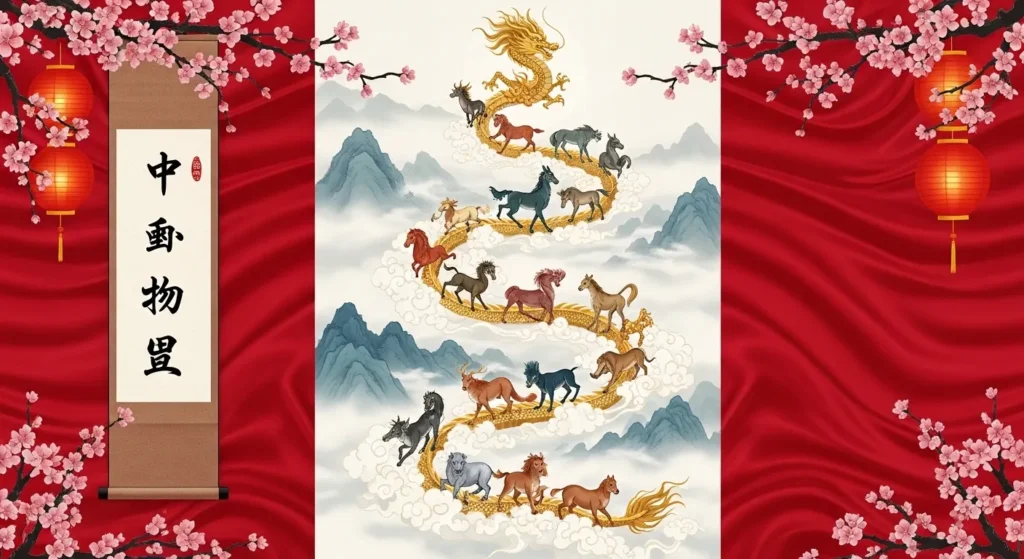
Chinese culture has one of the richest traditions of animal symbolism in the world. In Chinese philosophy, animals are not just creatures they are cosmic forces, carriers of energy (qi), and divine messengers.
The most well-known system is the Chinese Zodiac, where 12 animals each represent a year in a rotating cycle. But animal symbolism in Chinese culture goes far deeper than zodiac signs.
- The dragon is the most powerful symbol in Chinese culture representing imperial power, good luck, strength, and heaven itself. Unlike Western dragons, Chinese dragons are benevolent and deeply respected.
- The phoenix (Fenghuang) represents renewal, virtue, and feminine grace. It is often paired with the dragon to symbolize the union of yin and yang.
- The tiger stands for protection, bravery, and the power to ward off evil spirits. Many Chinese homes display tiger imagery to protect the family.
- The crane symbolizes longevity, wisdom, and immortality. Seeing a crane was considered a deeply auspicious sign in ancient China.
- The carp (koi) represents perseverance and success the famous story of the koi swimming upstream and transforming into a dragon teaches us that struggle leads to greatness.
Chinese animal symbolism reminds us that every creature carries divine energy. When you encounter any of these animals even in artwork or dreams it may be an invitation to receive their energy into your own life.
Japanese Animal Symbolism: Beauty, Honor, and the Natural World
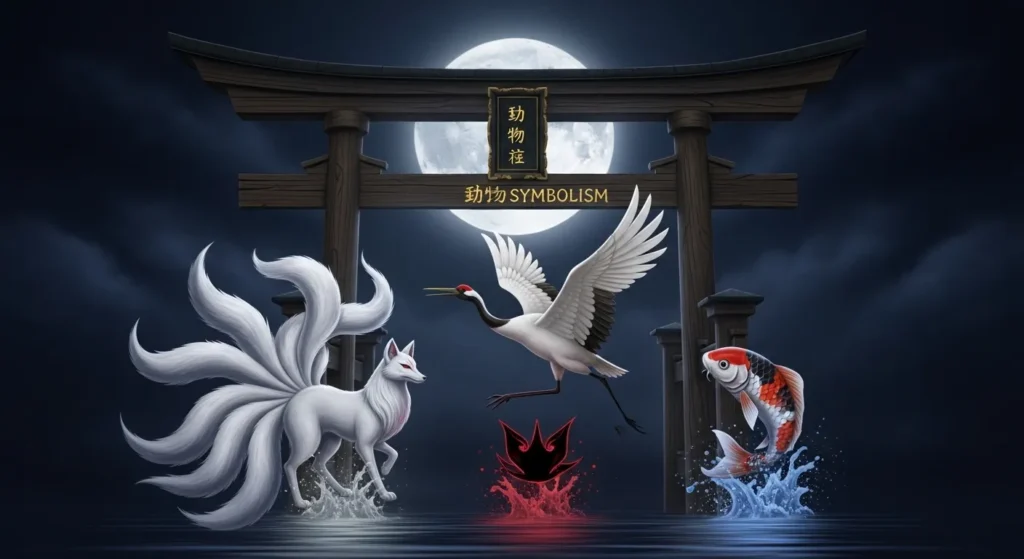
Japanese culture treats nature with profound respect, and animal symbolism is woven deeply into its art, mythology, and daily life.
- The crane (tsuru) is Japan’s most sacred bird, symbolizing longevity, loyalty, and good fortune. Folding 1,000 origami cranes (senbazuru) is believed to grant a wish, a practice that speaks to the deep emotional power animals hold in Japanese culture.
- The fox (kitsune) is one of Japan’s most complex symbols. Foxes are considered messengers of Inari, the god of fertility and prosperity. A white fox is considered especially sacred and lucky.
- The deer in Japan is a divine messenger, particularly associated with the gods of Nara. Deer roam freely around Todai-ji Temple they are living symbols of heaven’s presence on earth.
- The cat (maneki-neko) the famous beckoning cat symbolizes good luck, prosperity, and welcoming positive energy. You see it in shops and homes across Japan.
- The tanuki (raccoon dog) symbolizes good fortune, trickery, and the ability to shape-shift reminding us that life is full of surprises and we must stay adaptable.
Japanese animal symbolism teaches us to slow down and observe because the natural world is always communicating, if only we are quiet enough to listen.
Celtic Animal Symbolism: Magic From the Ancient Forests
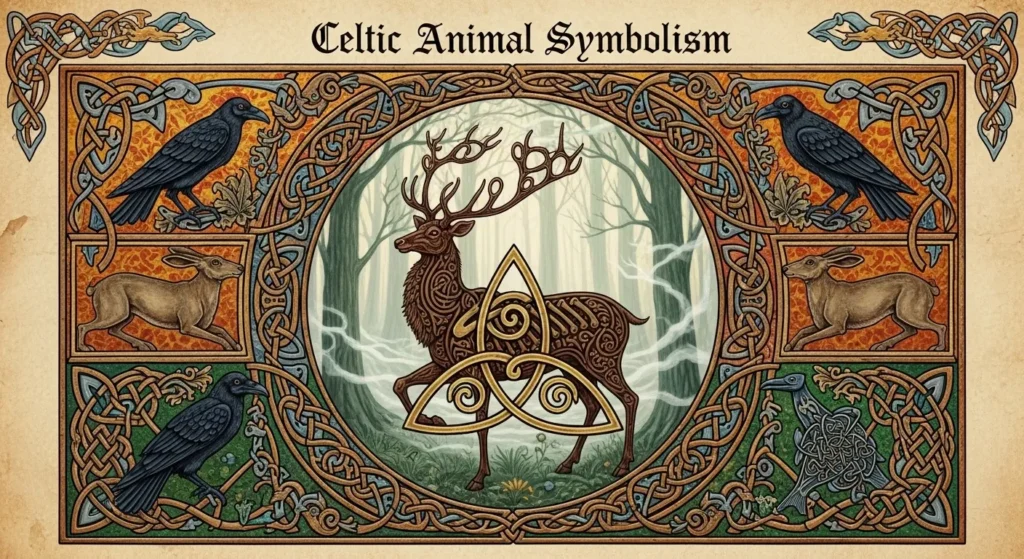
The Celts were deeply connected to the natural world, and their animal symbolism is some of the most spiritually rich in all of history.
- The stag was the king of the forest a symbol of masculine strength, sovereignty, and the wild spirit. The Celtic god Cernunnos is always depicted with stag antlers, representing the bridge between the human and animal worlds.
- The salmon held extraordinary meaning in Celtic tradition it was the creature of wisdom, knowledge, and prophecy. The famous legend of Fionn mac Cumhaill tells how eating the Salmon of Knowledge gave him access to all the world’s wisdom.
- The raven was a bird of prophecy, death, and transformation. The Morrigan, the Celtic goddess of fate, often appeared as a raven on the battlefield she was feared, but also deeply respected as a truth-teller.
- The hare was associated with the moon, mystery, and the otherworld. Hares were considered magical animals that existed between worlds.
- The horse represented freedom, travel, sovereignty, and the goddess Epona protector of horses, fertility, and the journey of the soul after death.
Celtic animal symbolism is raw, earthy, and deeply emotional. It doesn’t soften the harder truths of life instead, it helps us face them with courage.
Animal Symbolism Chart: A Quick Reference Guide
Think of this as your personal animal symbolism chart a quick compass when you need answers fast:
| Animal | Core Symbolism | Spiritual Message |
| Hawk | Awareness, vision | Pay attention right now |
| Turtle | Patience, protection | Slow down and trust the process |
| Elephant | Memory, wisdom, loyalty | Honor your roots |
| Peacock | Beauty, integrity, renewal | Show your true colors |
| Frog | Cleansing, fertility, change | Release what no longer serves you |
| Dragonfly | Illusion, change, lightness | Look beneath the surface |
| Raven | Magic, mystery, transformation | A major change is coming |
| Swan | Grace, love, inner beauty | Trust your own elegance |
Keep this chart somewhere you can find it. The next time an animal appears unexpectedly in your day, check it and then feel what resonates with your current situation.
Fox Animal Symbolism: The Trickster With a Heart of Gold
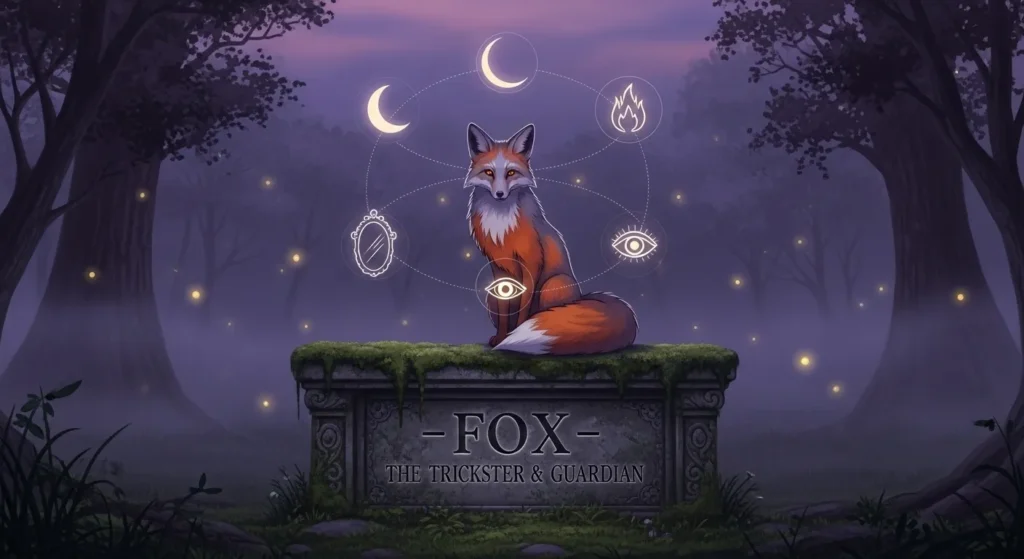
The fox is one of the most beloved and emotionally complex animals in spiritual tradition. Across cultures from Japan’s kitsune to Celtic folklore to Native American stories the fox is a trickster, a teacher, and a guide.
Fox animal symbolism includes:
- Cleverness and adaptability the fox survives by thinking quickly and changing course without hesitation
- Playfulness a reminder not to take life so seriously
- Camouflage and observation the fox teaches us to watch before we act
- Feminine energy and seduction in many traditions, the fox embodies magnetic, mysterious feminine power
- Quick thinking in the face of danger the fox rarely fights; it outsmarts
If a fox has appeared in your life, ask yourself: Where do I need to be more clever? Where have I been too rigid? What situation requires me to be adaptable rather than forceful?
The fox doesn’t overwhelm problems it dances around them until it finds the opening. That is its deepest gift to you.
Birth Animal Symbolism: The Animal That Chose You
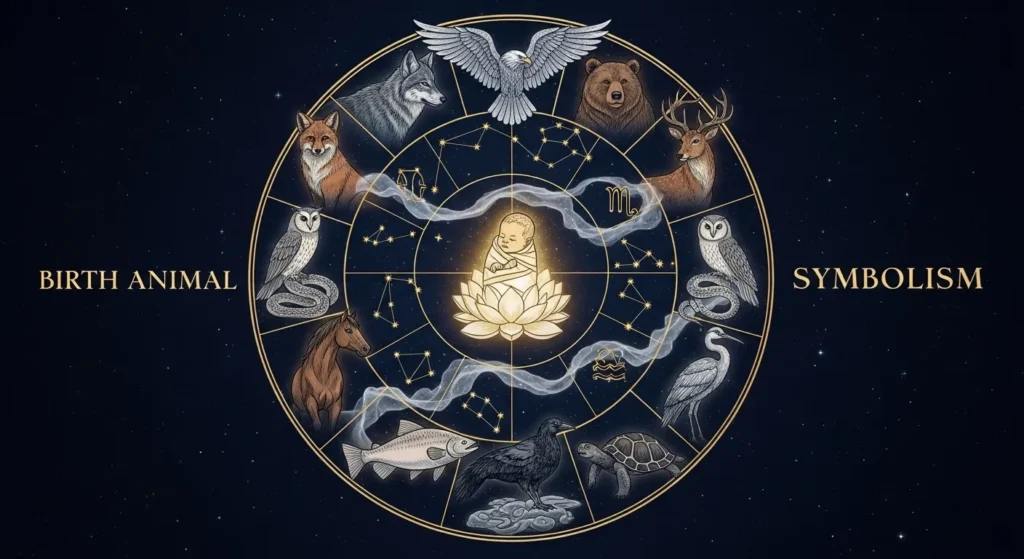
Many traditions believe that every person is born with a spirit animal an animal guide that walks with them through life, reflecting their deepest nature and offering protection.
Your birth animal symbolism can be found through:
- Your Native American birth totem (based on your birth date)
- Your Chinese zodiac animal (based on your birth year)
- Meditation and dreamwork many people meet their spirit animal in quiet inner states
- Recurring animal encounters the animal that shows up again and again in your life is often your guide
Birth animals are not chosen they choose you. They reflect qualities you already carry within yourself, even if you haven’t fully recognized them yet. Your birth animal is a mirror of your soul.
Animal Symbolism Meanings: Going Deeper Than a Google Search
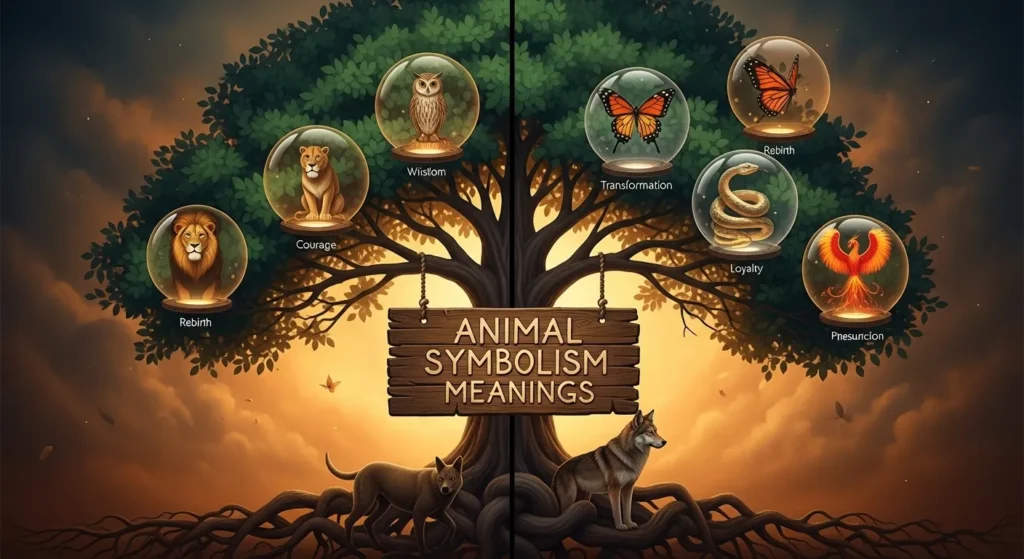
The true power of animal symbolism meanings lies not in memorizing a list but in feeling the message personally.
Two people can see the same crow and receive completely different messages. One might need to hear about transformation. Another might need a reminder to trust their intuition. The symbol speaks to where you are in your journey.
To deepen your personal understanding:
- Keep a journal of animal encounters, dreams, and feelings
- Sit in stillness after an animal encounter and ask: What is this animal’s quality that I need most right now?
- Notice emotional reactions sometimes we fear certain animals that actually carry our most needed lessons
Animal Symbolism in Art: When Painters Spoke in Animals
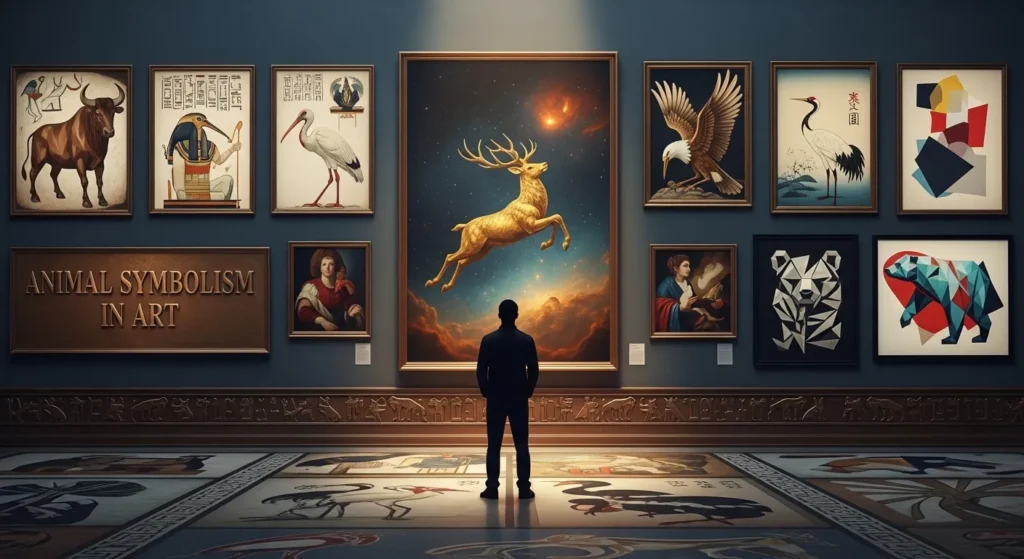
Throughout history, artists have used animal symbolism in art to communicate profound emotional and spiritual truths that words alone could not hold.
- In medieval Christian art, the lamb represented Christ’s innocence and sacrifice
- Leonardo da Vinci placed an ermine in his portrait of Cecilia Gallerani as a symbol of purity and nobility
- In ancient Egyptian art, the jackal-headed god Anubis guided souls through the afterlife
- Frida Kahlo painted herself with monkeys and deer animals that represented her emotional wounds, loneliness, and fierce vulnerability
- Indigenous Australian art is filled with animals that carry Dreamtime stories creation narratives encoded in animal form
When you see an animal in a painting, a sculpture, or even a tattoo don’t just see decoration. See communication.
Animal Symbolism in Literature: The Stories That Made Us Human
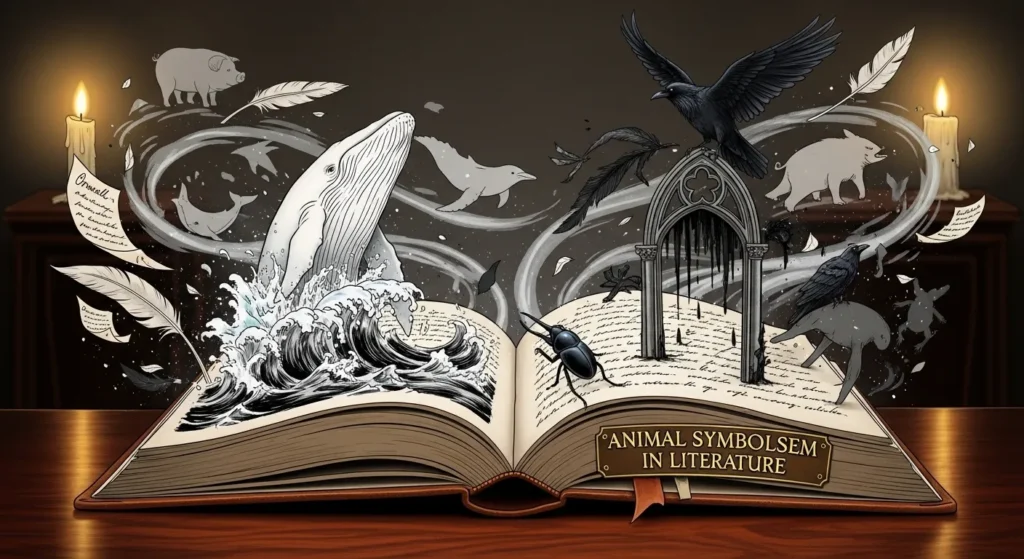
Animal symbolism in literature is as old as storytelling itself. From Aesop’s fables to Shakespeare to modern novels, animals carry the emotional weight that human characters sometimes cannot.
- The white whale in Moby Dick represents obsession, nature’s indifference, and the unknowable
- The mockingbird in To Kill a Mockingbird symbolizes innocence destroyed by hatred
- Orwell’s pigs in Animal Farm represent the corruption of power
- The lion Aslan in Narnia is one of literature’s most powerful symbols of sacrifice and resurrection
- Even Winnie the Pooh’s animals are psychological archetypes Eeyore for depression, Tigger for mania, Piglet for anxiety
Literature uses animals because we trust them. We open our hearts to an animal story in ways we sometimes can’t with purely human ones. That is the quiet magic of animal symbolism.
Three Real-Life Scenarios: When Animals Delivered the Message
Scenario1 Maria and the Butterfly Maria was sitting by her mother’s grave, one year after losing her. She was consumed by grief and couldn’t feel anything but heaviness. Then a yellow butterfly landed on her hand and stayed there for almost a minute. She felt her whole body go still. She said later: “I knew it was her. I just knew.” Whether it was or wasn’t that butterfly gave Maria permission to believe her mother was at peace. She wept but this time with relief instead of sorrow.
Scenario2 James and the Hawk James was about to quit his business after months of failure. He walked outside, defeated, and a red-tailed hawk landed on his fence post and stared at him. He looked it up that night and read that hawks symbolize vision and not giving up on what you can see clearly. He went back inside, made one more call and landed his first major client the next morning.
Scenario3 Priya and the Crow Priya kept seeing crows everywhere for two weeks on her car, outside her office, even in her dreams. She was avoiding a hard conversation with a friend. When she finally learned that crows symbolize truth and necessary transformation, she had the conversation. It was painful. But it saved the friendship. The crows, she said, stopped appearing the day after.
FAQs
Q1: Is animal symbolism the same in every culture? No and that’s what makes it so fascinating. A dog means loyalty in one culture and bad luck in another. Always consider the cultural and personal context when interpreting animal messages.
Q2: What if I’m afraid of the animal that keeps appearing to me? Fear is important information. Often the animals we fear carry the lessons we most need the ones we’ve been avoiding. Try to approach the symbol with curiosity rather than fear.
Q3: Can animals appear in dreams as spiritual messengers? Absolutely. Many traditions consider dream animals to be the clearest form of animal communication, because our conscious mind is quiet enough to truly receive the message.
Q4: Do I need to be religious or spiritual to benefit from animal symbolism? Not at all. Even from a purely psychological perspective, animals serve as powerful archetypes that reflect aspects of our personality, emotions, and subconscious mind.
Q5: How do I know which meaning applies to me? Trust your first emotional response. When you read a meaning and something inside you says yes that’s your answer. The right meaning will feel like recognition, not information.
Conclusion
You were never taught to see this way but some part of you always knew.
That fox that crossed your path. That eagle you couldn’t stop watching. That dream about the wolf you still remember years later. These were not random. They were moments of connection between you and something ancient, something wise, something that loves you enough to send a message in a language older than words.
Animal symbolism is not superstition. It is attentiveness. It is the practice of believing that the world is alive, that nature speaks, and that you are worthy of being spoken to.
The next time an animal finds you and it will stop. Breathe. Ask what it’s carrying for you. And then trust what you feel.
Because you already know how to listen. You just needed permission to believe it.

Hi, I’m Brandon Sanderson, an SEO expert and creative content strategist.
I help brands grow organically through smart keyword research and engaging storytelling.
Through Similifye.com, I share insights that help readers level up their content and search visibility.


