I still remember the first time I saw someone text, “spill the tea 👀”. I stared at my phone thinking… are we talking about actual tea or something else? Turns out, no cups were involved at all.
If you’ve seen tea used in texts, TikTok comments, or group chats and felt confused, you’re not alone. Slang evolves fast, and this one is everywhere right now.
Quick Answer:
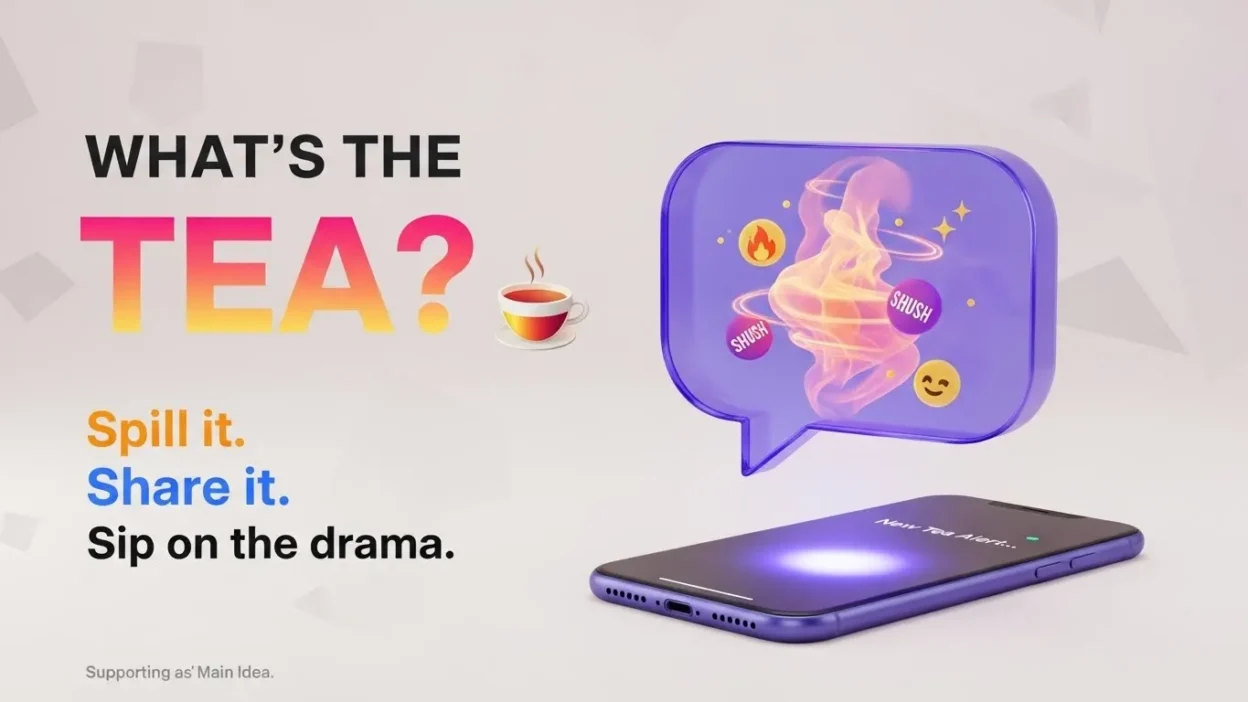
Tea means gossip, truth, or inside information. It’s a casual, playful, and social way of asking for or sharing interesting details—especially drama or secrets.
🧠 What Does Tea Mean in Text?
In texting and social media, tea refers to gossip, rumors, or the real story behind something. When someone says “that’s the tea” or “spill the tea,” they’re talking about sharing juicy details or honest information.
It doesn’t always have to be negative drama. Sometimes it simply means the truth or what’s really going on.
Example:
“Wait… that’s the tea? I had no idea!”
In short: Tea = gossip / truth / inside info = interesting details people want to know.
📱 Where Is Tea Commonly Used?
You’ll mostly see tea in casual, social settings, especially online:
- 📲 Text messages & group chats
- 🎵 TikTok captions & comments
- 👻 Snapchat
- 📸 Instagram stories
- 🧵 Twitter / X threads
Tone check:
✔️ Very casual
✔️ Fun and social-media–friendly
❌ Not formal or professional
💬 Examples of Tea in Conversation
Here are some realistic chat-style examples 👇
A: omg did you hear about them?
B: nooo 👀 spill the tea
—
A: why did she quit so suddenly?
B: i can’t say much but… that’s the tea ☕
—
A: everyone’s talking but idk what happened
B: i’ll tell you later, it’s a lot of tea 😭
—
A: was the rumor true?
B: yep. that’s actually the tea.
—
A: i’m confused about the drama
B: same, waiting for the tea 🍿
🕓 When to Use and When Not to Use Tea
✅ When to Use
- Casual chats with friends
- Gossip or drama discussions
- Social media comments
- Fun, playful conversations
❌ When Not to Use
- Work or office chats
- Professional emails
- Serious or sensitive topics
- Talking to elders or formal audiences
Context Comparison Table
| Context | Example Phrase | Why It Works |
|---|---|---|
| Friend Chat | “ok but what’s the tea 👀” | Fun & casual |
| Group Chat | “spill the tea already ☕” | Playful tone |
| Work Chat | “Can you share the details?” | Professional |
| “Please clarify the situation.” | Formal & clear |
🔄 Similar Slang Words or Alternatives
| Slang | Meaning | When to Use |
|---|---|---|
| Gossip | Rumors or talk | General conversations |
| Deets | Details | Casual chats |
| Scoop | Exclusive info | Informal sharing |
| Drama | Conflict or gossip | Social media |
| Lowdown | Full explanation | Friendly talks |
❓ FAQs
Q1: Does tea always mean gossip?
No. It can also mean the truth or real details, not just drama.
Q2: Is “spill the tea” rude?
Not usually. It’s playful, but avoid it in serious or sensitive situations.
Q3: Can tea be used in real-life conversations?
Yes! People often say it out loud, especially among friends.
Q4: Is tea used worldwide?
It’s most common in English-speaking online culture, especially Gen Z spaces.
Q5: Is tea flirty?
Not by default, but it can feel flirty depending on tone and emojis.
✅ Conclusion
Now that you know what does tea mean, it’s easy to spot and use it confidently. Tea is all about sharing or asking for gossip, truth, or interesting details in a fun, casual way.
You’ll mostly see it in texts, TikTok comments, and friend group chats—not formal settings.
Once you understand the vibe, using tea feels natural and playful. So next time someone says, “spill the tea ☕”, you’ll know exactly what they mean—and maybe even have some tea of your own to share.

I’m Isaac Asimov, an SEO specialist and content creator with a deep passion for technology and innovation.
I use data-driven insights to craft smart strategies that push content to the top.
At Similifye.com, I share practical SEO guidance that helps readers make search work smarter, not harder.