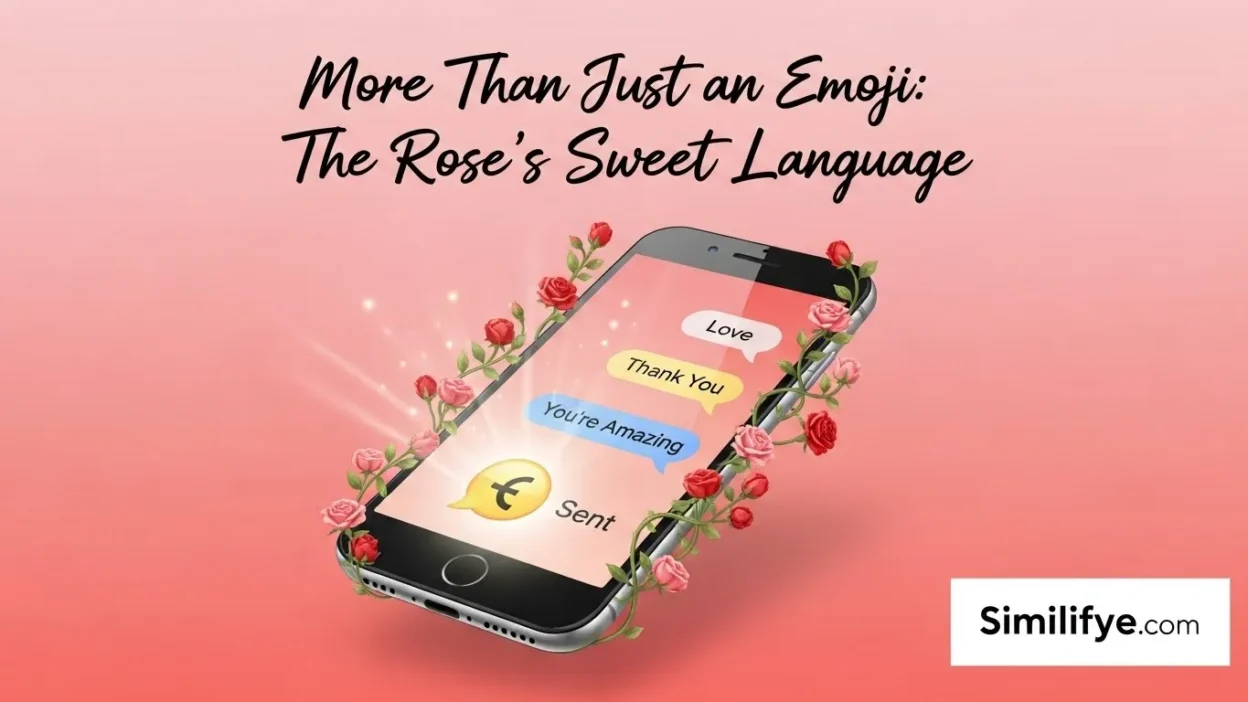
Have you ever opened a message, seen someone send you a single rose emoji 🌹, and immediately wondered, “Wait… what does that mean?”
I remember staring at my phone once, trying to figure out if the sender was being romantic, appreciative, or just… random. Roses can mean so many things in real life, so what about in texting?
If you’ve had the same confusion, you’re not alone.
Quick Answer:
“Rose” or the 🌹 emoji means love, appreciation, gratitude, or admiration. It’s often a sweet, flirty, or polite way of expressing positive feelings toward someone.
🧠 What Does Rose Mean in Text?
In texting, “rose” or the 🌹 emoji is used to show love, respect, thankfulness, or gentle affection.
It’s also commonly used as a romantic gesture, similar to giving someone an actual rose in real life.
Example:
“Thanks for helping me today 🌹” — meaning: I appreciate you.
In short:
Rose = Love / Appreciation / Respect = A warm, sweet, or flirty gesture.
📱 Where Is Rose Commonly Used?
You’ll see the 🌹 emoji frequently on:
- Instagram – in comments and captions
- TikTok – especially on appreciation or fan posts
- Snapchat – sent to close friends, crushes, or after receiving a compliment
- WhatsApp & iMessage – polite, sweet, or romantic chats
- Facebook – as a sign of support or condolences
Tone:
🌹 is casual, sweet, polite, and often flirty.
It’s NOT typically used in formal or professional messages.
💬 Examples of Rose in Conversation
Here are realistic chat examples showing how people use 🌹:
1. Romantic
A: you looked really nice today
B: aww thank you 🌹
2. Appreciative
A: thanks for covering my shift!
B: anytime 🌹
3. Friendly Compliment
A: loved your new song cover
B: omg thank u 🌹
4. Flirty
A: goodnight
B: goodnight 🌹
5. Respectful / Supportive
A: praying for your family
B: thank you so much 🌹
6. Gentle Reaction
A: i’m sorry if i bothered you
B: you’re ok don’t worry 🌹
7. After Receiving a Gift
A: hope you like it
B: i love it, thank you 🌹
🕓 When to Use and When Not to Use Rose
✅ When to Use 🌹
Use it when you want to sound:
- Sweet or romantic
- Appreciative
- Respectful
- Supportive
- Polite
- Soft or gentle in tone
- Flirty (lightly)
❌ When Not to Use 🌹
Avoid it when:
- Messaging your boss or clients
- Delivering bad news
- In serious or urgent situations
- Writing formal emails
- Talking about sensitive topics where emojis may feel inappropriate
Comparison Table
| Context | Example Phrase | Why It Works |
| Friend Chat | “Thanks for today 🌹” | Friendly, warm, casual |
| Crush Chat | “Goodnight 🌹” | Lightly flirty, sweet |
| Support Message | “I’m here for you 🌹” | Soft, comforting |
| Work Chat | “Thank you for your help.” | Emojis avoided → polite & professional |
| “Please review the file.” | Clear, formal, emoji-free |
🔄 Similar Slang Words or Alternatives
| Slang/Emoji | Meaning | When to Use |
| ❤️ Heart | Love, affection | Romantic, deep appreciation |
| 💐 Bouquet | Congratulations, respect | Celebrations, gratitude, polite messages |
| 🌸 Cherry Blossom | Softness, beauty | Compliments, aesthetic vibes |
| 💞 Two Hearts | Mutual affection | Flirty or romantic chats |
| 🤍 White Heart | Pure love, kindness | Friendly, comforting, non-romantic |
| 😊 Smiling Face | Warmth, friendliness | Everyday polite or casual messages |
❓ FAQs
1. Does sending 🌹 mean someone likes me?
Not always — it can mean appreciation or respect. But in flirty contexts, yes, it may suggest interest.
2. Is 🌹 always romantic?
No. While it can be romantic, it’s also commonly used for gratitude or politeness.
3. Can I send 🌹 to a friend?
Absolutely. Many people use it casually to show kindness or appreciation.
4. Is 🌹 appropriate in professional messages?
No, it’s considered too personal or emotional for work settings.
5. Is the rose emoji used differently on TikTok?
On TikTok, it often represents support, admiration, or fan appreciation rather than romance.
Conclusion
The “rose” or 🌹 emoji is one of the most versatile symbols in digital communication. It can express love, gratitude, support, admiration, or gentle affection depending on the context.
Whether someone is thanking you, flirting softly, or offering emotional support, a rose adds warmth to any message. Just like in real life, giving a rose feels thoughtful and sincere.
While it fits perfectly in casual, friendly, or romantic chats, it’s best avoided in formal or professional communication. Once you understand its tone and intention, you can use 🌹 confidently and respond to it naturally.

I’m Isaac Asimov, an SEO specialist and content creator with a deep passion for technology and innovation.
I use data-driven insights to craft smart strategies that push content to the top.
At Similifye.com, I share practical SEO guidance that helps readers make search work smarter, not harder.