The first time I saw someone type “that gun is OP” in a game chat, I honestly thought they were talking about the original poster from forums. I even nodded like I understood… until I realized everyone was arguing about balance, not people. 😅
If you’ve ever felt that same confusion while gaming, you’re not alone. Gaming slang moves fast, and OP is one of those terms you’ll see everywhere.
Quick Answer:
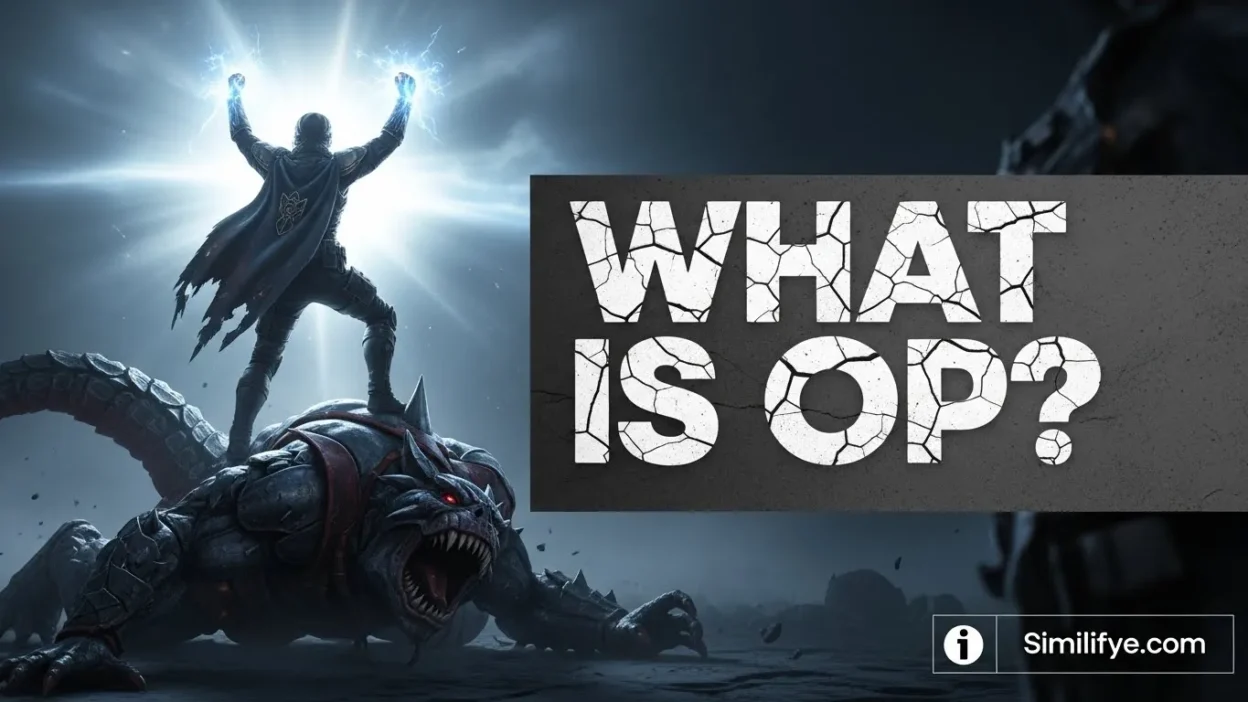
OP means “Overpowered.” It’s a casual gaming slang used to describe something that’s too strong or unfair compared to others.
🧠 What Does OP Mean in Gaming?
In gaming, OP stands for Overpowered. It’s used when a weapon, character, ability, or strategy is so strong that it feels unfair or breaks the balance of the game.
Gamers usually say OP when something gives a player an easy advantage without much effort.
Example:
“This new character is OP, they need a nerf.”
Sometimes OP can be complaining, and sometimes it’s praise — it depends on context.
In short: OP = Overpowered = Too strong or unfair in a game.
📱 Where Is OP Commonly Used?
You’ll see OP almost everywhere in gaming culture:
- 🎮 Online multiplayer games (FPS, MOBA, RPGs)
- 💬 In-game chat
- 🟣 Discord servers
- 📺 Twitch & YouTube comments
- 🧵 Reddit gaming threads
- 📱 Texting with gamer friends
Tone:
- ✅ Very casual
- ❌ Not formal at all
- 🎯 Perfect for gaming and social chats
You wouldn’t use OP in a professional setting — but in gaming, it’s totally normal.
💬 Examples of OP in Conversation
Here are some realistic gaming chat examples 👇
Example 1
A: “how did you kill me so fast?”
B: “bro that sniper is OP 😭”
Example 2
A: “new patch dropped today”
B: “yeah but that hero is still OP”
Example 3
A: “should i try this build?”
B: “do it, it’s kinda OP rn 🔥”
Example 4
A: “everyone using the same gun”
B: “because it’s OP lol”
Example 5
A: “why are you winning every match?”
B: “not my fault this combo is OP 😅”
🕓 When to Use and When Not to Use OP
✅ When to Use OP
- Casual gaming chats
- Talking about game balance
- Joking with friends
- Streams, comments, and Discord
- Describing strong weapons or characters
❌ When Not to Use OP
- Formal conversations
- Work or school discussions
- Non-gamers (they may misunderstand)
- Serious complaints or reports
- Professional emails
📊 Context Comparison Table
| Context | Example Phrase | Why It Works |
| Friend Chat | “that sword is OP 😄” | Casual & gamer-friendly |
| Gaming Discord | “devs need to nerf this, it’s OP” | Common gaming language |
| Work Chat | “this tool is very effective” | Professional & clear |
| “the feature seems too strong” | Formal tone needed |
🔄 Similar Slang Words or Alternatives
| Slang | Meaning | When to Use |
| Broken | Extremely unfair or buggy | When something ruins balance |
| Nerf | Make something weaker | Patch discussions |
| Buffed | Made stronger | Updates or changes |
| Meta | Best current strategy | Competitive play |
| Cheese | Cheap but effective tactic | Joking or casual talk |
❓ FAQs
❓ Does OP always mean something negative?
ANS: Not always. It can be a complaint or praise, depending on tone.
❓ Is OP only used in gaming?
ANS: Mostly yes, but it can also mean Original Poster on forums. Context matters.
❓ Can OP be used sarcastically?
ANS: Absolutely. Gamers often use it jokingly.
❓ Is OP offensive?
ANS: No. It’s neutral slang and very common.
❓ Can beginners use OP?
ANS: Yes! It’s easy and widely understood in gaming communities.
🎯 Conclusion
Now you know exactly what does OP mean in gaming and why gamers use it so often. It simply means overpowered something that feels too strong or unfair compared to the rest of the game.
Once you understand the context, OP becomes one of the easiest gaming terms to spot and use.
You don’t overthink it if something dominates matches or feels unstoppable, calling it OP is totally normal. Use it confidently in casual chats, game discussions, and with fellow gamers 🎮

Hi, I’m Brandon Sanderson, an SEO expert and creative content strategist.
I help brands grow organically through smart keyword research and engaging storytelling.
Through Similifye.com, I share insights that help readers level up their content and search visibility.